Coconut-Free Shampoo: Why It's Harder Than It Looks
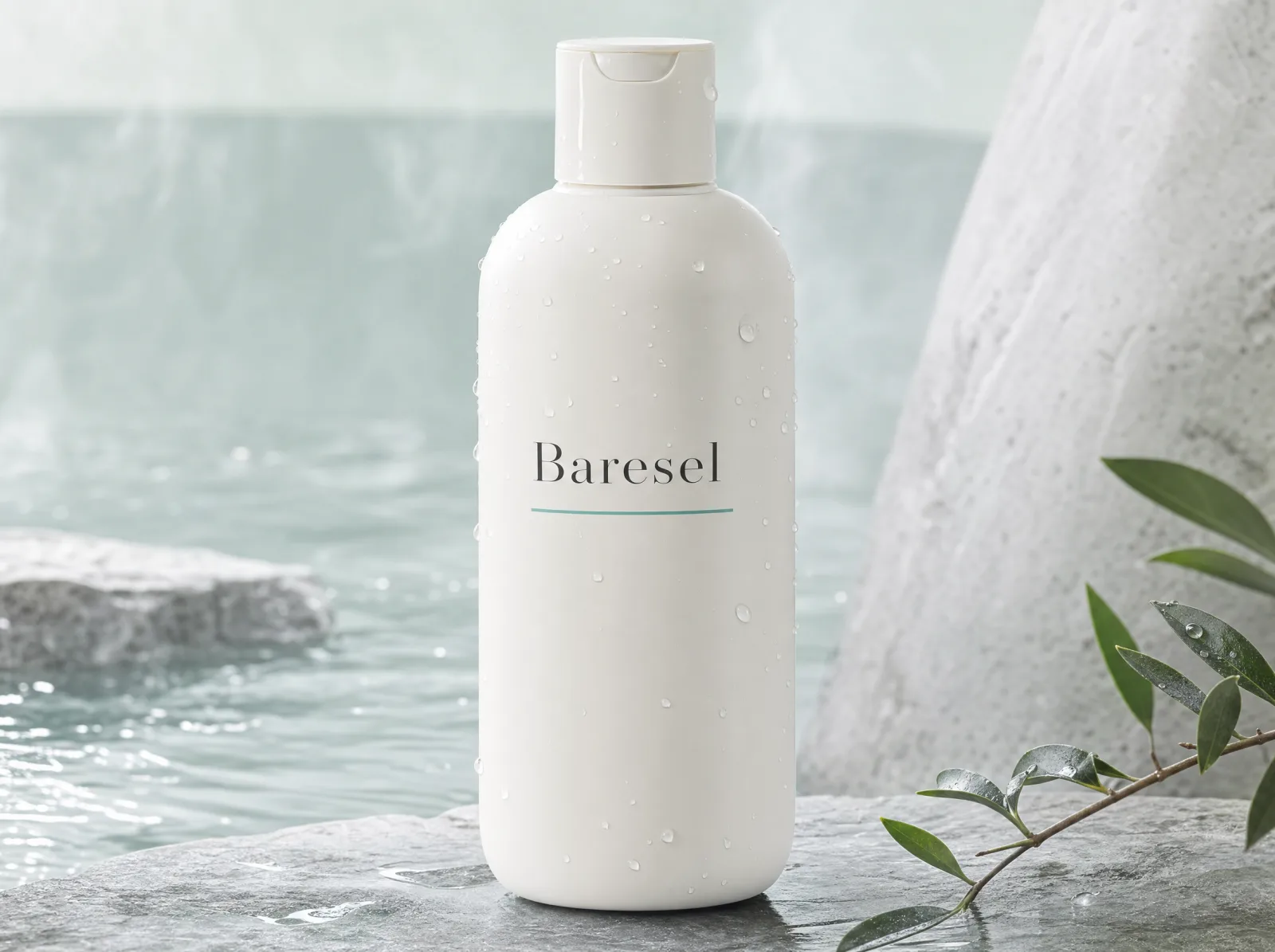
Baresel Shampoo
$22 · 250 ml · fragrance-free
- No cocamidopropyl betaine or any amidopropyl betaine
- No alkyl glucosides (decyl, coco, lauryl)
- No sulfates, MI/MCI, formaldehyde releasers or fragrance
Where it stands: formula published in full below; pre-orders open; no charge until your order ships; free worldwide shipping; cancel any time before then.
Genuinely coconut-free shampoo is rare, because the coconut plant is the raw material behind most "gentle" surfactants — including cocamidopropyl betaine (CAPB), sodium cocoyl isethionate (SCI), and sodium cocoyl glutamate. If you react to a specific coconut-derived cleanser, the practical move is not to chase a "coconut-free" label (which is rarely accurate) but to read the full INCI list and match it against a known-source table. Baresel is CAPB-free and sulfate-free, but it is NOT coconut-free: several of its mild cleansers are coconut-derived. What Baresel offers instead is full transparency — every surfactant is named, so a coconut-sensitive reader can see exactly which ingredients trace back to coconut and decide with an allergist whether it fits.
At a glance
- Genuinely coconut-free shampoo is rare: cocamidopropyl betaine, sodium cocoyl isethionate, sodium cocoyl glutamate, and coco-glucoside all start from coconut fatty acids.
- Label flags: the fragments coco, cocoyl, and cocamido in an INCI name almost always signal a coconut origin.
- A cocamidopropyl betaine allergy is usually a reaction to the manufacturing impurity amidoamine, not to coconut itself: in a 1997 use-test study, 6 of 9 CAPB-positive subjects reacted to amidoamine and none to purified CAPB.
- Alkyl glucosides are made from glucose plus a fatty alcohol that is primarily derived from palm, coconut, or rapeseed oil, so a glucoside is not a coconut-free guarantee.
- Baresel is CAPB-free and glucoside-free but not coconut-free: its isethionate, taurate, and glutamate cleansers are coconut-derived.
- Baresel: $22 · 250 ml · pre-order, charged only when it ships · free worldwide shipping.
- A coconut-surfactant sensitivity is a medical matter: read the full INCI and patch-test with a dermatologist or allergist.
Fast facts
- "Coco" or "cocamido-" at the start of an INCI name almost always signals a coconut-derived ingredient.
- Cocamidopropyl betaine (CAPB) is itself coconut-derived — it is made by reacting coconut fatty acids with a synthetic amine.
- Many of the mildest modern cleansers (sodium cocoyl isethionate, sodium cocoyl glutamate, coco-glucoside) are also coconut-derived.
- Decyl glucoside is one of the few common gentle surfactants often made from corn/wheat glucose rather than coconut — but its fatty-alcohol portion can still be coconut- or palm-sourced, so it is not guaranteed coconut-free.
- "Coconut-free" is almost never a reliable label on shampoo — the honest approach is to read the full ingredient list against a source table.
- A coconut surfactant sensitivity is a medical matter: patch testing with a dermatologist or allergist is the only way to identify your specific trigger.
- Baresel is CAPB-free and sulfate-free, but contains coconut-derived surfactants — it is transparent, not coconut-free.
Why "coconut-free" shampoo barely exists
Coconut is the workhorse feedstock of modern personal care. Its fatty acids are cheap, renewable, and easy to convert into surfactants — the molecules that make shampoo foam and lift oil. That is exactly why so many cleansers you'd think of as "natural" or "gentle" start from coconut oil in the factory. The result: on a typical shampoo label, the foaming agents, the co-surfactant, and often the mildness booster all trace back to the same coconut source.
This matters because people sometimes assume a sulfate-free or "CAPB-free" formula must also be coconut-free. It usually isn't. Sodium lauryl sulfate is coconut-derived; so is the sodium cocoyl isethionate that replaces it in a mild bar or shampoo. Swapping harsh coconut surfactants for gentle coconut surfactants changes how the product behaves on skin, but it does not remove coconut from the formula. If your reaction is genuinely to a coconut-derived molecule, only the full ingredient list — not the marketing — can tell you whether a product is safe for you.
Common shampoo surfactants and their typical source
Where these cleansers usually come from
| Surfactant (INCI) | Typical source | Also in Baresel? |
|---|---|---|
| Cocamidopropyl betaine (CAPB) | Coconut-derived | No — Baresel is CAPB-free |
| Sodium lauryl / laureth sulfate (SLS/SLES) | Coconut- or palm-derived | No — Baresel is sulfate-free |
| Sodium cocoyl isethionate (SCI) | Coconut-derived | Yes — coconut-derived |
| Sodium cocoyl glutamate | Coconut-derived | Yes — coconut-derived |
| Coco-glucoside | Coconut-derived | No |
| Decyl glucoside | Glucose often corn/wheat; fatty alcohol may be coconut/palm | Yes — not a coconut-free guarantee |
| Coco-betaine | Coconut-derived | No |
| Lauryl glucoside | Fatty alcohol often coconut/palm-derived | No |
A quick label-reading heuristic: the syllables coco, cocoyl, and cocamido are near-certain flags for a coconut origin. "Glucoside" ingredients are more ambiguous — the sugar half is frequently corn- or wheat-derived, but the fatty-alcohol half can still come from coconut or palm, and manufacturers don't always disclose which. When in doubt, treat a glucoside as *possibly* coconut-derived rather than assume it's safe.
Is a coconut reaction the same as a CAPB allergy?
Not necessarily — and this is where careful diagnosis matters. Cocamidopropyl betaine was named Allergen of the Year 2004 by the American Contact Dermatitis Society, but the sensitizers in CAPB are usually *manufacturing by-products* (such as amidoamine and 3-dimethylaminopropylamine), not the coconut fatty acid itself. That means a person can be allergic to CAPB while tolerating other coconut-derived cleansers — and, conversely, someone reacting to coconut-derived surfactants broadly may not test positive to CAPB at all.
What a coconut-sensitive reader should actually do
A practical, honest checklist
- Get patch tested. A contact allergy is a medical matter. A dermatologist or allergist can identify your specific trigger — coconut fatty acids, a CAPB by-product, a glucoside, or something else entirely.
- Read the full INCI list, every time. Don't rely on front-of-pack claims. Match each surfactant against a source table like the one above.
- Treat "coco-", "cocoyl-", and "cocamido-" as coconut flags. These are the most reliable naming signals.
- Be cautious with glucosides. Decyl and coco-glucoside can vary by supplier; the fatty-alcohol portion may be coconut- or palm-derived.
- Ask brands for the raw-material source if a glucoside's origin isn't stated — a transparent brand should be able to answer.
- Distrust the phrase "coconut-free" unless a brand documents every ingredient's source; on shampoo it is rarely accurate.
Where Baresel fits
**Baresel is not a coconut-free shampoo — and we won't pretend otherwise.** Several of Baresel's mild cleansers are coconut-derived: Sodium Cocoyl Isethionate, Sodium Methyl Cocoyl Taurate and Sodium Cocoyl Glutamate all start from coconut fatty acids. What Baresel *is*: cocamidopropyl-betaine-free and sulfate-free (no SLS/SLES), fragrance-free, with a fully disclosed ingredient list. If your trigger is CAPB specifically, that matters. If you react to coconut-derived surfactants broadly, Baresel is likely NOT for you — and the honest thing we can do is show you exactly what's inside so you and your allergist can judge, rather than sell you a "coconut-free" promise we can't keep.
Get Baresel · $22Baresel's cleansing system, by coconut source
| Ingredient | Role | Coconut-derived? |
|---|---|---|
| Sodium Cocoyl Isethionate | Primary mild cleanser / foam | Yes |
| Sodium Methyl Cocoyl Taurate | Foaming co-surfactant | Yes — coconut-derived (cocoyl) |
| Sodium Cocoyl Glutamate | Mild anionic cleanser | Yes |
| Glycerin | Humectant / conditioning | No (typically plant oils or synthetic) |
| Panthenol | Conditioning (pro-vitamin B5) | No |
| Sodium Benzoate + Potassium Sorbate | Preservative (no MI/MCI, no formaldehyde donors) | No |
Baresel at a glance
- CAPB-free (cocamidopropyl-betaine-free) — the core promise
- Sulfate-free — no SLS or SLES
- Fragrance-free — no parfum, no masking scent
- Preserved without methylisothiazolinone (MI/MCI) or formaldehyde donors like DMDM hydantoin
- NOT coconut-free — contains coconut-derived surfactants (SCI, sodium cocoyl glutamate)
- $22 / 250 ml
Frequently asked
Is there a truly coconut-free shampoo?
Genuinely coconut-free shampoos are rare, because most gentle surfactants are coconut-derived. Some niche brands build formulas around glucosides that use corn- or wheat-based glucose, but even those can contain coconut- or palm-derived fatty alcohols, so "coconut-free" is hard to guarantee. The reliable approach is to read the full ingredient list against a source table rather than trust the label — and to confirm your specific trigger with an allergist.
Is cocamidopropyl betaine coconut-derived?
Yes. CAPB is manufactured by reacting coconut fatty acids with a synthetic amine. However, the ingredients that most commonly cause contact allergy in CAPB are manufacturing by-products (such as amidoamine), not the coconut portion itself — which is why a CAPB allergy and a broader coconut sensitivity are not the same thing.
If a shampoo is CAPB-free, is it coconut-free too?
No. Removing cocamidopropyl betaine removes one coconut-derived surfactant, but most CAPB-free formulas still contain others, like sodium cocoyl isethionate or sodium cocoyl glutamate. Baresel is CAPB-free and sulfate-free, yet still contains coconut-derived cleansers. The two claims are unrelated.
Is Baresel a coconut-free shampoo?
No — and we state this plainly. Baresel contains coconut-derived surfactants (Sodium Cocoyl Isethionate and Sodium Cocoyl Glutamate), and its Sodium Methyl Cocoyl Taurate may involve coconut- or palm-derived fatty alcohols. Baresel is CAPB-free, sulfate-free, and fragrance-free with a fully disclosed ingredient list, but it is not coconut-free. If you react to coconut-derived cleansers broadly, it is likely not the right choice for you.
How do I read a label for coconut-derived ingredients?
Scan the INCI (ingredient) list for the syllables "coco," "cocoyl," and "cocamido" — these almost always indicate a coconut origin. Glucoside ingredients (decyl glucoside, coco-glucoside) are more ambiguous: the sugar portion is often corn- or wheat-based, but the fatty-alcohol portion may be coconut- or palm-derived. When unsure, ask the brand for the raw-material source.
Why do I still react even to sulfate-free, coconut-based cleansers?
Because "sulfate-free" and "mild" don't mean "free of your trigger." Gentle cleansers like SCI and sodium cocoyl glutamate are still coconut-derived, and glucosides can be independent contact allergens for some people. A reaction points to an individual sensitivity that needs patch testing by a dermatologist or allergist to pin down — no ingredient label can diagnose it for you.
Related reading
- What is cocamidopropyl betaine?The coconut-derived surfactant, why it's used, and why it's a common allergen.→
- Shampoo for cocamidopropyl betaine allergyIf your patch test flagged CAPB specifically, start here.→
- Baresel ingredients, fully explainedEvery surfactant, preservative, and conditioner named — with its source.→
- Baresel shampoo overviewWhat the CAPB-free, sulfate-free, fragrance-free formula is and isn't.→
- Shampoo for a sensitive, itchy scalpHow to approach a reactive scalp when the trigger is unclear.→
Sources
- DermNet — Cocamidopropyl betaine allergy
- American Academy of Dermatology — Contact dermatitis overview
- Fowler JF et al. Allergy to cocamidopropyl betaine may be due to amidoamine: a patch test and product use test study. Contact Dermatitis, 1997 (PubMed)
- DermNet — Cocamidopropyl betaine: allergic contact dermatitis
- Loranger C et al. Alkyl glucosides in contact dermatitis. Dermatitis, 2017 (fatty-alcohol sources of alkyl glucosides)
Sources
- DermNet — Cocamidopropyl betaine allergy
- American Academy of Dermatology — Contact dermatitis overview
- Fowler JF et al. Allergy to cocamidopropyl betaine may be due to amidoamine: a patch test and product use test study. Contact Dermatitis, 1997 (PubMed)
- DermNet — Cocamidopropyl betaine: allergic contact dermatitis
- Loranger C et al. Alkyl glucosides in contact dermatitis. Dermatitis, 2017 (fatty-alcohol sources of alkyl glucosides)
Baresel Shampoo · $22
No charge until it ships