Positive Patch Test to Cocamidopropyl Betaine: What to Avoid
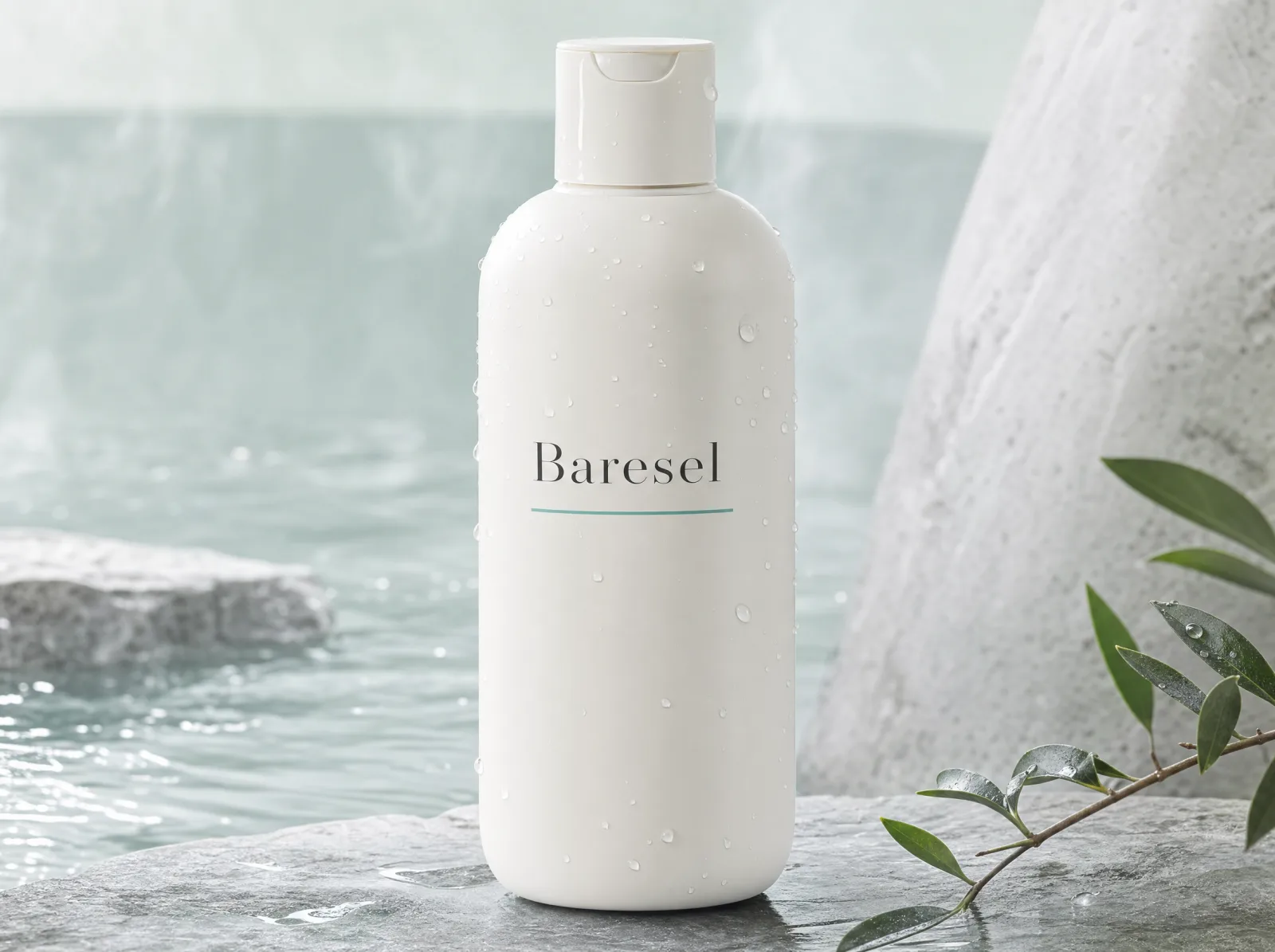
Baresel Shampoo
$22 · 250 ml · fragrance-free
- No cocamidopropyl betaine or any amidopropyl betaine
- No alkyl glucosides (decyl, coco, lauryl)
- No sulfates, MI/MCI, formaldehyde releasers or fragrance
Where it stands: formula published in full below; pre-orders open; no charge until your order ships; free worldwide shipping; cancel any time before then.
A positive patch test to cocamidopropyl betaine (CAPB) means you now avoid a family of ingredients, not one word. The sensitizer is usually a manufacturing impurity carried in CAPB, amidoamine or DMAPA, so related amidopropyl surfactants made by the same route can provoke the same reaction. This page gives you the INCI names to strike from every label, the product categories where CAPB hides beyond shampoo, the two clinician-linked tools that turn a patch-test result into a personal safe list, and one concrete example of what a CAPB-free shampoo ingredient list looks like. A contact allergy is a medical matter: read the full INCI of every product, and let the dermatologist or allergist who ran your patch test interpret which names apply to you.
Fast facts
- In a 1997 use-test study, 6 of 9 CAPB-positive subjects reacted to the impurity amidoamine, and none reacted to CAPB that had been purified of amidoamine (Fowler et al., Contact Dermatitis).
- Cocamidopropyl betaine was the American Contact Dermatitis Society's Allergen of the Year for 2004.
- Related amidopropyl betaines (for example lauramidopropyl betaine) share the same DMAPA and amidoamine impurity chemistry, according to the Cosmetic Ingredient Review's 2012 assessment.
- Cocamidopropyl hydroxysultaine is made by reacting DMAPA with coconut oil, and a reaction to it has been reported in the dermatology literature.
- CAPB appears in shampoos, conditioners, soaps, makeup removers, cleansing wipes, shaving cream, contact lens solutions, some toothpastes, and household cleaners (DermNet).
- Patch tests for CAPB are typically read at 48 and 96 hours; allergic contact dermatitis is delayed, so a same-day sting is a different problem.
- ACDS CAMP and SkinSAFE can generate a personalized product list from your patch-test results; neither replaces reading the label on the bottle in your hand.
- "Hypoallergenic" has no Federal definition in the United States; the FDA says the term means whatever a company wants it to mean.
What a positive CAPB patch test actually tells you
A positive patch test means your immune system has been sensitized to something in the CAPB test material, and that it will mount a delayed reaction, usually an itchy rash appearing a day or more after contact, when it meets that substance again. The nuance that matters for label reading is what "that substance" is. Commercial CAPB is made by reacting coconut fatty acids with 3-dimethylaminopropylamine (DMAPA); the intermediate is cocamidopropyl dimethylamine, also called amidoamine. Both can remain as impurities. In the key use-test study, Fowler and colleagues had ten CAPB-positive people use a CAPB shampoo, hand soap, and body wash; seven developed dermatitis, six of nine patch-tested subjects reacted to amidoamine, and none reacted to CAPB that had been purified of amidoamine. The authors concluded amidoamine is likely the actual sensitizer in most cases, while noting CAPB itself may be the allergen in rare ones.
The practical consequence: any surfactant made through the same DMAPA route can carry the same impurities, so your avoidance list should cover the amidopropyl family, not only the four words on your patch-test report. Your clinician decides how wide that net should be. DermNet notes the test is usually read at 48 and 96 hours with a 1% aqueous preparation, and that management is avoidance: any identified product containing CAPB is discontinued, and the reaction can take weeks to settle afterward.
The INCI names to avoid
Avoidance list after a positive CAPB patch test
| INCI name | Why it is on the list | Confidence |
|---|---|---|
| Cocamidopropyl betaine | The allergen you tested positive to; carries amidoamine and DMAPA impurities. | Avoid |
| Lauramidopropyl betaine and other "-amidopropyl betaine" names | Same amidopropyl chemistry and the same impurity profile (CIR, 2012). | Avoid |
| Cocamidopropyl hydroxysultaine | Made by reacting DMAPA with coconut oil; a reaction has been reported (Guin, 2000). Residual DMAPA is typically under 10 ppm, but that is a supplier figure, not a guarantee for you. | Avoid unless your clinician says otherwise |
| Cocamidopropyl dimethylamine (amidoamine) | The impurity itself, sometimes used as an ingredient in its own right. | Avoid |
| Oleamidopropyl dimethylamine | Documented allergen since 1984; co-reactions with CAPB, amidoamine, and DMAPA reported in the same patient (Moreau and Sasseville, 2004). | Avoid |
| Cocamidopropylamine oxide | Contains amidoamine and DMAPA as impurities. Evidence of cross-reaction is weaker: a product test in 10 CAPB-sensitive people did not produce reactions (CIR, 2008). | Ask your clinician |
| Coco-betaine | A different chemistry (an alkyl betaine with no amidopropyl link), but labels sometimes use the two names loosely. | Treat as suspect; verify with your clinician |
Two notes on the table. First, an INCI list can name the impurity directly: cocamidopropyl dimethylamine occasionally appears as a conditioning ingredient, and it is the very compound most CAPB-positive people react to. Second, the cocamidopropylamine oxide row is deliberately marked lower confidence; the Cosmetic Ingredient Review recorded that a test product with impurity levels comparable to those in the amine oxide failed to provoke a reaction in ten known CAPB-sensitive people. That is not proof it is safe for you, and it is the kind of judgment call your dermatologist should make with your results in front of them.
Where CAPB hides beyond shampoo
CAPB reactions cluster on the eyelids, face, scalp, and neck, and shampoo is often the first product people suspect. It is rarely the only one. DermNet lists shampoos, conditioners, and soaps; makeup removers and cleansing wipes; shaving cream; contact lens solutions; some toothpastes; some cosmetics; and household spray cleaners and detergent wipes. The case literature backs each of those up in specific ways: eyelid dermatitis traced to a hard contact lens solution (Cameli et al., 1991), and a two-year cheilitis in a child that cleared once a "2-in-1 toothpaste and mouthwash" containing CAPB was stopped (Agar and Freeman, 2005). The Fowler use test provoked dermatitis with a hand soap and body wash as readily as with shampoo. Baby washes and micellar-style makeup removers are not exempt from any of this; read them exactly as you would a shampoo, ingredient by ingredient.
Build a safe list with CAMP or SkinSAFE
Two tools turn a patch-test result into a product list you can shop from. ACDS CAMP (Contact Allergen Management Program) is a web-based resource run by the American Contact Dermatitis Society. Your health care provider must be an ACDS member; after patch testing they generate allergen search codes, you register at acdscamp.org or in the ACDS CAMP app (Android and iOS), and the program produces a personalized list of personal-care products free of your identified allergens and closely related ingredients. SkinSAFE, built on Mayo Clinic research, works from a barcode scan or search across more than 165,000 products; a provider can issue a "SAFE for Me" code tied to your patch-test results, or you can enter known allergens yourself and filter by markers such as fragrance-free.
Use them, and keep one habit alongside them: read the physical label before the first use of any new bottle. Databases follow reformulations with a lag, DermNet points out that ingredients can change without consumer notice, and only the INCI printed on the packaging you hold is legally definitive. A short ingredient list is your friend here, because it is faster to check and leaves fewer names to reason about.
What a CAPB-free shampoo INCI looks like
A genuinely CAPB-free shampoo replaces the betaine with cleansers from a different chemical family, and its label shows no "-amidopropyl" name at all. Baresel is one concrete example. Its full published INCI is: Aqua/Water, Sodium Cocoyl Isethionate, Sodium Methyl Cocoyl Taurate, Sodium Cocoyl Glutamate, Glycerin, Panthenol, Sodium Chloride, Guar Hydroxypropyltrimonium Chloride, Citric Acid, Sodium Benzoate, Potassium Sorbate, Tocopherol. There is no cocamidopropyl betaine, no hydroxysultaine, no amine oxide, and no alkyl glucoside; it is also fragrance-free and preserved without isothiazolinones or formaldehyde releasers. Two honest limits apply: it is not coconut-free (the isethionate, taurate, and glutamate cleansers are coconut-derived), and it is a cosmetic, not a treatment for your allergy. It is $22 for 250 ml, on pre-order, charged only when it ships, with free worldwide shipping. Check the list against your own results, and patch-test the finished product before regular use.
Frequently asked
My patch test says cocamidopropyl betaine. Do I also have to avoid coco-betaine?
Coco-betaine is an alkyl betaine made without the amidopropyl link, so it does not share the DMAPA and amidoamine impurity route that explains most CAPB reactions. Labels sometimes use the two names loosely, however, and some clinicians advise avoiding both. Treat coco-betaine as suspect and ask the dermatologist who read your patch test whether your results justify avoiding it.
Is cocamidopropyl hydroxysultaine safe after a positive CAPB test?
Treat it as a likely cross-reactor. The Cosmetic Ingredient Review documents that it is produced by reacting dimethylaminopropylamine (DMAPA) with coconut oil, the same impurity-generating route as CAPB, and a reaction to it has been reported in Contact Dermatitis. Supplier data put residual DMAPA under 10 ppm, but that is a manufacturing figure, not a promise about your skin. Avoid it unless your clinician tells you otherwise.
Why did my patch test react to amidoamine as well?
Because amidoamine (cocamidopropyl dimethylamine) is the intermediate used to make CAPB and remains in it as an impurity. In the 1997 use-test study, six of nine CAPB-positive subjects reacted to amidoamine, and none reacted to CAPB that had been purified of it. Many clinics now test both. A positive amidoamine result reinforces the case for avoiding the whole amidopropyl family.
I switched shampoo and my eyelids are still reacting. What else could it be?
CAPB is common in makeup removers, cleansing wipes, contact lens solutions, some toothpastes, hand soaps, and body washes, all of which reach the eyelids by hand or by rinsing. Audit every rinse-off and leave-on product that touches your face. If everything checks out and the rash persists, the trigger may be a different allergen, such as a fragrance or a preservative, which is a question for your dermatologist.
How do I get an ACDS CAMP or SkinSAFE safe list?
For ACDS CAMP, your provider must be a member of the American Contact Dermatitis Society; after patch testing they give you allergen search codes, and you register at acdscamp.org or in the ACDS CAMP app to see products free of your allergens and closely related ingredients. For SkinSAFE, a participating provider can issue a SAFE for Me code, or you can enter known allergens yourself and scan barcodes in the app. Read the printed label before first use regardless; databases lag reformulations.
Does a CAPB-free shampoo treat or prevent my allergy?
No. A contact allergy is a medical condition, and no shampoo can diagnose, treat, cure, or prevent it. A CAPB-free shampoo only removes one known trigger from your routine. Diagnosis, interpretation of your patch test, and treatment of any dermatitis belong with a dermatologist or allergist.
Keep reading
- Baresel ingredients, in fullThe complete INCI list, role by role, so you can check every name against your results.→
- Cocamidopropyl betaine cross-reactorsThe wider family of related surfactants and the honest limits of a CAPB-free claim.→
- Shampoo for a cocamidopropyl betaine allergyHow to read an INCI list and shop when CAPB is your confirmed trigger.→
- What is cocamidopropyl betaine?Plain-language explainer of the surfactant and why it sensitizes.→
- Pre-order Baresel$22, 250 ml, charged only when it ships, free worldwide shipping.→
Sources
- Fowler JF et al. Allergy to cocamidopropyl betaine may be due to amidoamine: a patch test and product use test study. Contact Dermatitis, 1997 (PubMed)
- DermNet — Cocamidopropyl betaine: allergic contact dermatitis
- Cosmetic Ingredient Review — Safety assessment of cocamidopropyl betaine and related amidopropyl betaines, Int J Toxicol, 2012 (PubMed)
- Cosmetic Ingredient Review — Safety assessment of alkyl sultaines as used in cosmetics (cocamidopropyl hydroxysultaine manufacture and DMAPA impurity), 2017
- Guin JD. Reaction to cocamidopropyl hydroxysultaine, an amphoteric surfactant and conditioner. Contact Dermatitis, 2000 (PubMed)
- Moreau L, Sasseville D. Allergic contact dermatitis from cocamidopropyl betaine, cocamidoamine, 3-(dimethylamino)propylamine, and oleamidopropyl dimethylamine: co-reactions or cross-reactions? Dermatitis, 2004 (PubMed)
- de Groot AC, Liem DH. Contact allergy to oleamidopropyl dimethylamine. Contact Dermatitis, 1984 (PubMed)
- Cosmetic Ingredient Review — Amended final report of the safety assessment of cocamidopropylamine oxide, Int J Toxicol, 2008 (PubMed)
- Cameli N et al. Eyelid dermatitis due to cocamidopropyl betaine in a hard contact lens solution. Contact Dermatitis, 1991 (PubMed)
- Agar N, Freeman S. Cheilitis caused by contact allergy to cocamidopropyl betaine in '2-in-1 toothpaste and mouthwash'. Australas J Dermatol, 2005 (PubMed)
- Militello M et al. American Contact Dermatitis Society Allergens of the Year 2000 to 2020. Dermatol Clin, 2020 (PubMed)
- American Contact Dermatitis Society — ACDS CAMP (Contact Allergen Management Program)
- American Contact Dermatitis Society — ACDS CAMP frequently asked questions
- SkinSAFE — How SkinSAFE works
- DermNet — Allergic contact dermatitis (patch testing and avoidance)
- U.S. FDA — Cosmetics Safety Q&A: "Hypoallergenic"
Sources
- Fowler JF et al. Allergy to cocamidopropyl betaine may be due to amidoamine. Contact Dermatitis, 1997 (PubMed)
- DermNet — Cocamidopropyl betaine: allergic contact dermatitis
- Cosmetic Ingredient Review — Safety assessment of cocamidopropyl betaine and related amidopropyl betaines, 2012 (PubMed)
- Cosmetic Ingredient Review — Safety assessment of alkyl sultaines, 2017
- Guin JD. Reaction to cocamidopropyl hydroxysultaine. Contact Dermatitis, 2000 (PubMed)
- Moreau L, Sasseville D. Co-reactions or cross-reactions? Dermatitis, 2004 (PubMed)
- de Groot AC, Liem DH. Contact allergy to oleamidopropyl dimethylamine. Contact Dermatitis, 1984 (PubMed)
- Cosmetic Ingredient Review — Cocamidopropylamine oxide, 2008 (PubMed)
- Cameli N et al. Eyelid dermatitis due to cocamidopropyl betaine in a hard contact lens solution, 1991 (PubMed)
- Agar N, Freeman S. Cheilitis caused by contact allergy to cocamidopropyl betaine in toothpaste and mouthwash, 2005 (PubMed)
- Militello M et al. ACDS Allergens of the Year 2000 to 2020. Dermatol Clin, 2020 (PubMed)
- American Contact Dermatitis Society — ACDS CAMP
- American Contact Dermatitis Society — ACDS CAMP FAQs
- SkinSAFE — How SkinSAFE works
- DermNet — Allergic contact dermatitis
- U.S. FDA — Cosmetics Safety Q&A: "Hypoallergenic"
Baresel Shampoo · $22
No charge until it ships