Why a Sulfate-Free Shampoo Can Still Sting or Itch
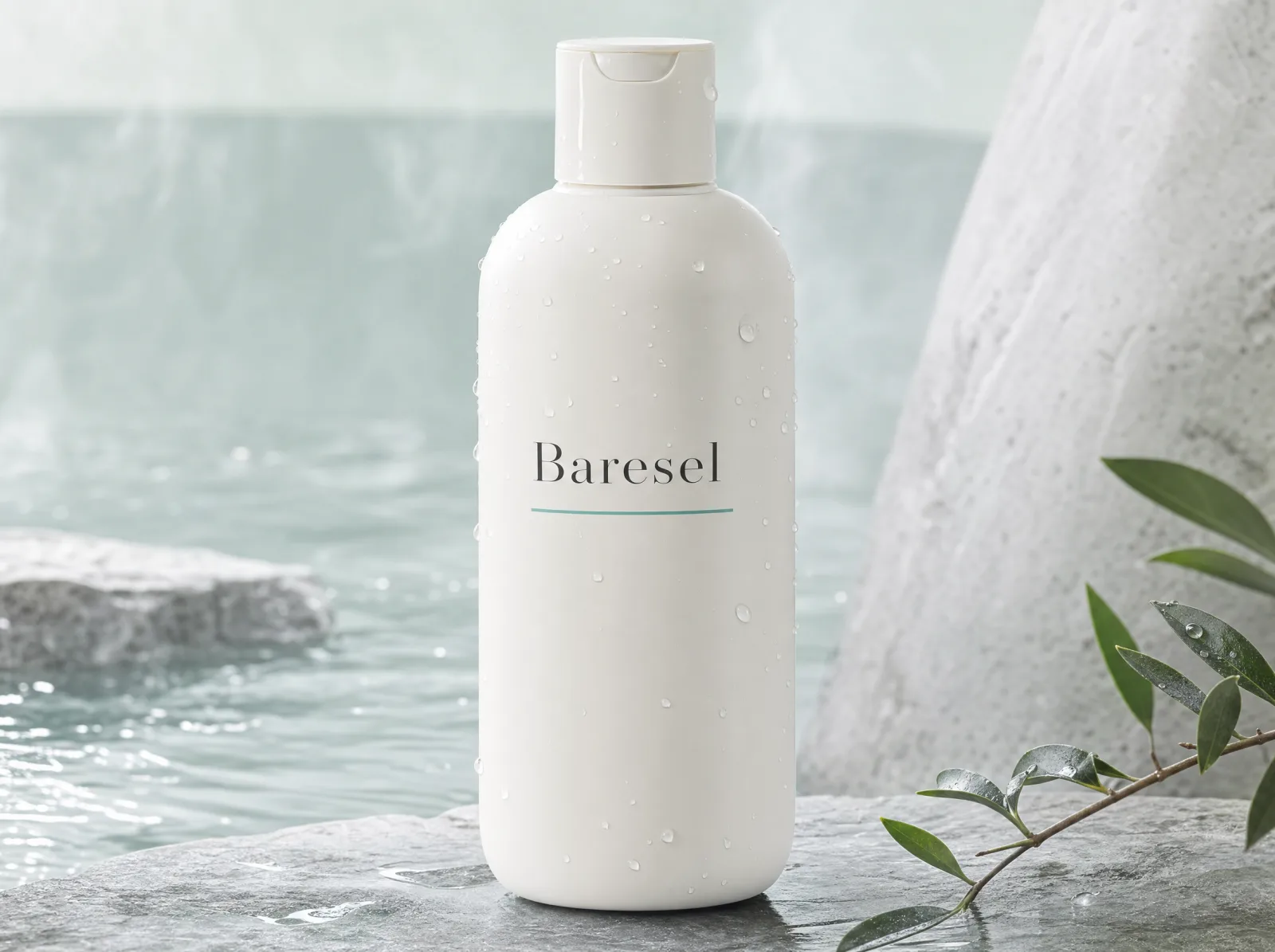
Baresel Shampoo
$22 · 250 ml · fragrance-free
- No cocamidopropyl betaine or any amidopropyl betaine
- No alkyl glucosides (decyl, coco, lauryl)
- No sulfates, MI/MCI, formaldehyde releasers or fragrance
Where it stands: formula published in full below; pre-orders open; no charge until your order ships; free worldwide shipping; cancel any time before then.
A sulfate-free shampoo can still sting or itch because "sulfate-free" only tells you two ingredients are absent; it says nothing about what replaced them. The usual substitutes, cocamidopropyl betaine and the alkyl glucosides, are both documented contact allergens and former Allergens of the Year, and sarcosinates have their own case reports. Fragrance and preservatives, the two most common cosmetic allergens of all, are untouched by a sulfate-free claim. This page separates stinging from itching, lists what is documented for each replacement surfactant, and gives a one-variable-at-a-time method for narrowing down the cause. A contact allergy is a medical matter: read the full INCI and patch-test with a dermatologist or allergist.
Fast facts
- Sodium lauryl sulfate is the reference irritant used to induce experimental irritant contact dermatitis; removing it is real, but it is a subtraction, not a promise about the rest of the formula.
- Cocamidopropyl betaine, the most common sulfate replacement, was the American Contact Dermatitis Society's Allergen of the Year for 2004; the sensitizer is usually the impurity amidoamine.
- Alkyl glucosides (decyl, lauryl, coco-glucoside) were Allergen of the Year for 2017; 5% of 897 patients in one cosmetic-dermatitis series reacted to decyl and/or lauryl glucoside.
- Sodium lauroyl sarcosinate has been reported as a cause of allergic contact dermatitis, including in a product marketed as hypoallergenic.
- Irritant contact dermatitis accounts for about 80% of contact dermatitis and can appear within minutes; allergic contact dermatitis is delayed, usually more than 12 hours, peaking around 48 hours (DermNet).
- Fragrance is the most common cosmetic allergen and preservatives are the second; both survive a sulfate-free label intact.
- In a controlled study, rinse-off soap preserved with 100 ppm methylisothiazolinone provoked reactions in 10 of 10 MI-allergic subjects.
- Patch testing is the gold standard for diagnosing allergic contact dermatitis; no label can do it for you.
Sulfate-free is a subtraction, not a promise
Sulfate-free means sodium lauryl sulfate and sodium laureth sulfate were left out. That is worth something: SLS is the surfactant dermatology researchers reach for when they want to produce irritant contact dermatitis on purpose, because it reliably raises water loss through the skin in a dose-related way. But a shampoo still has to clean, so the formulator swaps in other surfactants, and the label term says nothing about which ones. The most common replacement is cocamidopropyl betaine, precisely because it is mild by irritancy standards, foams well, and is inexpensive. The second is an alkyl glucoside. Both are milder irritants than SLS and both are documented contact allergens, which is a different property entirely. A person can have a scalp that tolerates SLS's harshness and reacts to a "gentle" betaine, because irritation and allergy are two mechanisms, not two points on one scale.
The usual replacements and what is documented
Common sulfate replacements in shampoo
| Surfactant (INCI) | Type | What is documented | Source |
|---|---|---|---|
| Cocamidopropyl betaine | Amphoteric | Allergen of the Year 2004. Contact allergy usually traced to the impurity amidoamine; 6 of 9 CAPB-positive subjects reacted to it in a use-test study. | Fowler 1997; ACDS review 2020 |
| Decyl, lauryl, coco-glucoside | Nonionic (alkyl glucoside) | Allergen of the Year 2017. 5% of 897 cosmetic-dermatitis patients reacted; 65% of those to both decyl and lauryl glucoside. | Severin and Belsito 2017 |
| Sodium lauroyl sarcosinate | Anionic (acyl sarcosinate) | Case reports of allergic contact dermatitis: occupational, in liquid soap (2005), and in a cleanser marketed as hypoallergenic (2015). | Zemtsov 2005; Hanson and Warshaw 2015 |
| Sodium C14-16 olefin sulfonate | Anionic (sulfonate, not a sulfate) | Reviewed by the Cosmetic Ingredient Review as safe as used; irritation increases with concentration, and it is a strong cleanser, so it is more an irritancy question than a documented allergy. | CIR 2023 |
| Disodium lauroamphodiacetate | Amphoteric (amphoacetate) | Identified as a novel surfactant allergen in the same 2015 hypoallergenic-cleanser report. | Hanson and Warshaw 2015 |
| Sodium cocoyl isethionate, sodium cocoyl glutamate, sodium methyl cocoyl taurate | Anionic (isethionate, acyl glutamate, taurate) | Not among the ACDS Allergens of the Year 2000 to 2020. Any surfactant can still irritate or, rarely, sensitize; patch-test rather than assume. | ACDS review 2020 |
The table is deliberately about documentation, not danger rankings. Olefin sulfonate, for instance, has a clean sensitization record but is a strong enough cleanser that a dry, tight, stinging scalp after a "sulfate-free" wash is a plausible irritant story. Sarcosinates appear in only a handful of case reports, but two of those reports involved products explicitly sold as hypoallergenic, which is a useful reminder that the word has no Federal definition in the United States; the FDA says it means whatever a company wants it to mean.
Sting or itch: irritation or allergy?
The timing of your symptoms is the most useful clue you have before a patch test. DermNet puts irritant contact dermatitis at about 80% of all contact dermatitis; it is direct chemical damage, needs no prior sensitization, and can show up within minutes of a strong irritant or after weeks of a weak one. Stinging or burning during the wash, with tightness and dryness afterward, fits that picture, and the suspects are the surfactant load and the wash frequency. Allergic contact dermatitis is immune-mediated and delayed: the rash usually develops more than 12 hours after contact and peaks around 48 hours, and it is typically itchy rather than stinging. An itchy, flaking rash on the hairline, eyelids, ears, or neck that arrives a day or two after washing fits that picture, and the suspects are a specific allergen, whether a surfactant, a fragrance, or a preservative. Only patch testing, which DermNet calls the gold standard, can confirm the allergic case.
The other two suspects: fragrance and preservatives
If the surfactants check out, look at the two ingredient classes that cause the most cosmetic allergy and that a sulfate-free claim never touches. Fragrance is the most common source of contact dermatitis from cosmetics; prevalence of fragrance allergy is 0.7 to 2.6% in the general population and 5 to 11% in patch-test populations. On a US label, a fragrance blend can be listed as the single word "fragrance" because the FDA treats the formula as a trade secret, so one line can stand for dozens of aroma chemicals, and DermNet warns that so-called unscented products can still contain a masking fragrance. Preservatives are the second most common cosmetic allergen. Methylisothiazolinone was Allergen of the Year for 2013; in a randomized, blinded repeated-application study, a liquid soap preserved at 100 ppm MI, then the maximum allowed in cosmetics, provoked reactions in 10 of 10 MI-allergic subjects and a 50 ppm soap in 7 of 9, while none of 19 controls reacted. The EU banned MI from new leave-on cosmetics in 2015 and lowered the rinse-off limit. A sulfate-free shampoo preserved with MI/MCI, or scented with parfum, has simply moved your problem to a different line of the label.
How to narrow it down
One variable at a time
- Keep the evidence. Photograph the full INCI of every shampoo, conditioner, body wash, and face wash you have used in the last few months, tolerated or not. Your clinician will want this.
- Compare lists, not claims. Line up the products that stung or itched against the ones that did not and look for the names that appear only in the first group: a betaine, a glucoside, a sarcosinate, parfum, MI/MCI, DMDM hydantoin.
- Note the timing. Immediate sting points toward irritation and total surfactant load; a delayed itchy rash points toward allergy and a specific ingredient.
- Change one thing. Switch to a product that removes a single suspect class, use it for two to three weeks, and change nothing else, including conditioner. Two changes at once tell you nothing.
- Check the rest of the routine. Cocamidopropyl betaine and MI are common in hand soap, body wash, and cleansing wipes; a shampoo swap cannot clear a rash that a body wash keeps feeding.
- Get patch tested. If the itch is recurrent or chronic, ask a dermatologist or allergist for patch testing. Standard series include CAPB, decyl glucoside, fragrance mixes, and MI, and the result turns guesswork into an avoidance list.
- Ignore "hypoallergenic" and "dermatologist tested." Neither term is defined in US regulation, and neither tells you what is in the bottle.
As one example of a shampoo that removes several suspect classes at once so there is less to rule out: Baresel leaves out cocamidopropyl betaine and the whole amidopropyl-betaine family, the alkyl glucosides, sulfates, fragrance and masking scent, and isothiazolinone and formaldehyde-releasing preservatives. Its full INCI is Aqua/Water, Sodium Cocoyl Isethionate, Sodium Methyl Cocoyl Taurate, Sodium Cocoyl Glutamate, Glycerin, Panthenol, Sodium Chloride, Guar Hydroxypropyltrimonium Chloride, Citric Acid, Sodium Benzoate, Potassium Sorbate, Tocopherol; it is $22 for 250 ml, on pre-order, charged only when it ships, with free worldwide shipping. It is a cosmetic, not a treatment; its cleansers are coconut-derived and can, rarely, sensitize like any surfactant, so it belongs in your one-variable test, not above it. Read the list against your own results and patch-test the finished product.
Frequently asked
Why does my sulfate-free shampoo burn my scalp?
Burning or stinging during the wash usually points to irritation rather than allergy. Sulfate-free formulas still need cleansers, and some replacements, such as sodium C14-16 olefin sulfonate, are strong enough to dry and irritate a compromised scalp. Wash frequency, water temperature, and an already-inflamed barrier add to it. If the sting comes with a delayed itchy rash, an allergen may be involved instead, and that is a question for patch testing.
Can a sulfate-free shampoo cause an allergic reaction?
Yes. The most common sulfate replacements are documented contact allergens: cocamidopropyl betaine was the American Contact Dermatitis Society's Allergen of the Year in 2004 and alkyl glucosides in 2017. Sodium lauroyl sarcosinate has case reports of its own. Fragrance and preservatives such as methylisothiazolinone are also unaffected by a sulfate-free claim. Sulfate-free describes two absences, not the presence of anything gentle.
How do I tell irritation from an allergy?
Timing is the best clue short of a patch test. Irritant contact dermatitis is direct damage, needs no prior sensitization, makes up about 80% of contact dermatitis, and can appear within minutes as stinging and tightness. Allergic contact dermatitis is immune-mediated and delayed, usually more than 12 hours after contact and peaking around 48 hours, typically as an itchy rash. Only patch testing with a dermatologist or allergist can confirm the allergic case.
Is cocamidopropyl betaine a sulfate?
No. It is an amphoteric surfactant made from coconut fatty acids and dimethylaminopropylamine, chemically unrelated to sodium lauryl sulfate. It is, in fact, the surfactant most often used to replace sulfates, which is why many sulfate-free and 'gentle' shampoos contain it. The contact allergy it causes is usually traced to the manufacturing impurity amidoamine.
What preservatives should I check for if my scalp itches?
Methylisothiazolinone (MI) and methylchloroisothiazolinone (MCI) first: MI was Allergen of the Year in 2013, and rinse-off soap preserved at 100 ppm MI provoked reactions in every MI-allergic subject in a controlled study. Then formaldehyde releasers such as DMDM hydantoin. Preservatives are the second most common cosmetic allergen after fragrance, and they are common in shampoo, so read that part of the label as carefully as the surfactants.
Does a shampoo without these ingredients treat or prevent my dermatitis?
No. A shampoo is a cosmetic and cannot diagnose, treat, cure, or prevent an allergy or dermatitis. Leaving out documented allergens reduces the number of things your scalp has to tolerate; it does not change your immune system. If symptoms are recurrent or chronic, see a dermatologist or allergist, ask about patch testing, and let the result, not the label, decide what you avoid.
Keep reading
- Baresel ingredients, in fullThe complete INCI list and what is deliberately left out.→
- Shampoo for a sensitive, itchy scalpWhat to leave out when the trigger is not yet identified.→
- Fragrance-free shampoo for a sensitive scalpFragrance-free versus unscented, and why the difference matters.→
- Cocamidopropyl betaine cross-reactorsThe related surfactants that can trigger the same reaction as CAPB.→
- Pre-order Baresel$22, 250 ml, charged only when it ships, free worldwide shipping.→
Sources
- DermNet — Allergic contact dermatitis (patch testing, irritant vs allergic)
- DermNet — Contact reactions to cosmetics (fragrance and preservatives as the most common cosmetic allergens; irritant contact dermatitis about 80% of cases)
- Di Nardo A et al. Sodium lauryl sulfate (SLS) induced irritant contact dermatitis. Contact Dermatitis, 1996 (PubMed)
- Fowler JF et al. Allergy to cocamidopropyl betaine may be due to amidoamine. Contact Dermatitis, 1997 (PubMed)
- DermNet — Cocamidopropyl betaine: allergic contact dermatitis
- Severin RK, Belsito DV. Patch testing with decyl and lauryl glucoside. Dermatitis, 2017 (PubMed)
- Zemtsov A, Fett D. Occupational allergic contact dermatitis to sodium lauroyl sarcosinate in the liquid soap. Contact Dermatitis, 2005 (PubMed)
- Hanson JL, Warshaw EM. Contact allergy to surfactants in a hypoallergenic liquid cleanser. Dermatitis, 2015 (PubMed)
- Cosmetic Ingredient Review — Sodium alpha-olefin sulfonates, Int J Toxicol, 2023 (PubMed)
- Militello M et al. American Contact Dermatitis Society Allergens of the Year 2000 to 2020. Dermatol Clin, 2020 (PubMed)
- Reeder MJ. Allergic contact dermatitis to fragrances. Dermatol Clin, 2020 (PubMed)
- DermNet — Fragrance allergy (masking fragrance in 'unscented' products)
- U.S. FDA — Fragrances in cosmetics (labeling fragrance ingredients as "fragrance")
- Yazar K et al. Methylisothiazolinone in rinse-off products causes allergic contact dermatitis: a repeated open-application study. Br J Dermatol, 2015 (PubMed)
- DermNet — Methylisothiazolinone allergy (Allergen of the Year 2013, EU restrictions)
- U.S. FDA — Cosmetics Safety Q&A: "Hypoallergenic"
Sources
- DermNet — Allergic contact dermatitis
- DermNet — Contact reactions to cosmetics
- Di Nardo A et al. SLS induced irritant contact dermatitis. Contact Dermatitis, 1996 (PubMed)
- Fowler JF et al. Allergy to cocamidopropyl betaine may be due to amidoamine, 1997 (PubMed)
- DermNet — Cocamidopropyl betaine: allergic contact dermatitis
- Severin RK, Belsito DV. Patch testing with decyl and lauryl glucoside, 2017 (PubMed)
- Zemtsov A, Fett D. Occupational allergic contact dermatitis to sodium lauroyl sarcosinate, 2005 (PubMed)
- Hanson JL, Warshaw EM. Contact allergy to surfactants in a hypoallergenic liquid cleanser, 2015 (PubMed)
- Cosmetic Ingredient Review — Sodium alpha-olefin sulfonates, 2023 (PubMed)
- Militello M et al. ACDS Allergens of the Year 2000 to 2020, 2020 (PubMed)
- Reeder MJ. Allergic contact dermatitis to fragrances, 2020 (PubMed)
- DermNet — Fragrance allergy
- U.S. FDA — Fragrances in cosmetics
- Yazar K et al. Methylisothiazolinone in rinse-off products causes allergic contact dermatitis, 2015 (PubMed)
- DermNet — Methylisothiazolinone allergy
- U.S. FDA — Cosmetics Safety Q&A: "Hypoallergenic"
Baresel Shampoo · $22
No charge until it ships